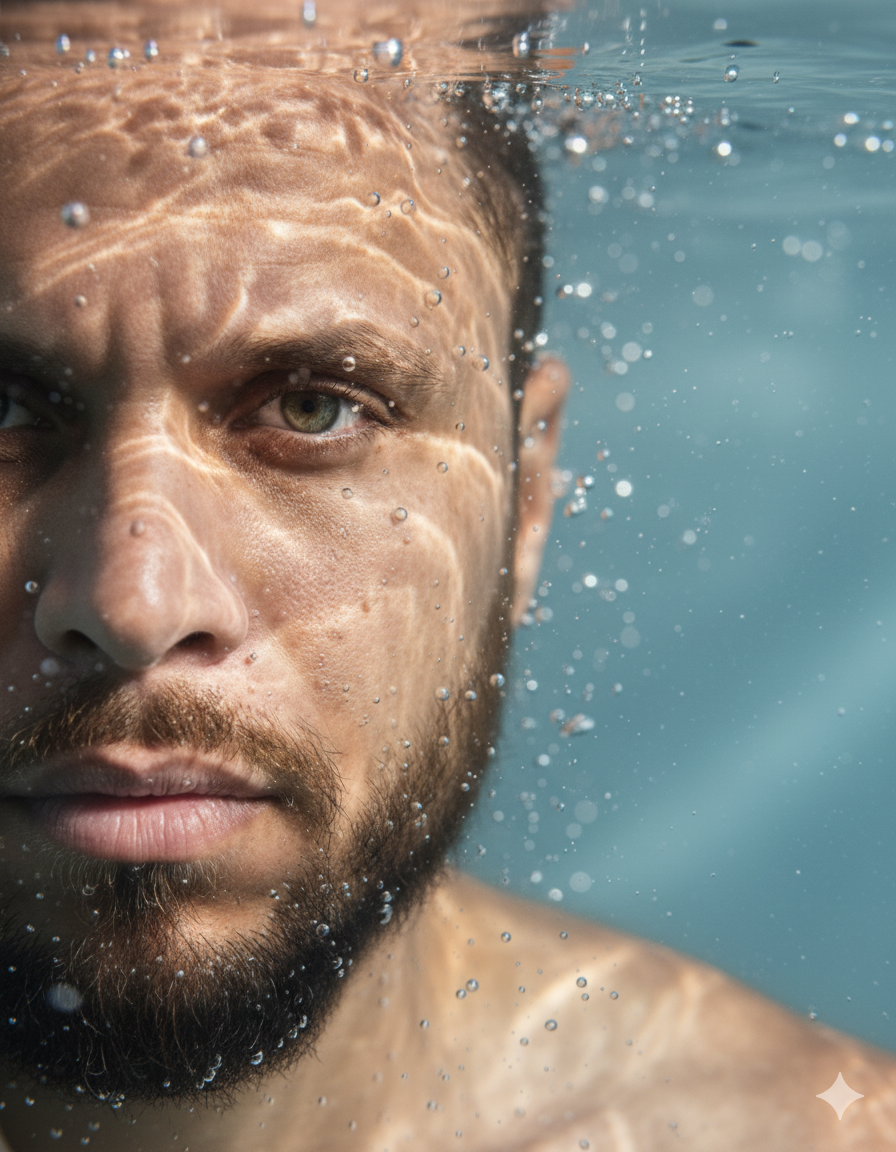
Capturing the physics of water is one of the most difficult challenges for AI models. Rendering realistic underwater environments requires simulating light refraction (caustics), suspended bubbles, current distortion, and subsurface scattering on the subject's skin. However, with the right prompting syntax, you can produce dreamlike, hyper-realistic submerged portraits.
To successfully instruct your AI engine to render clean water physics, you need to understand lighting refraction vocabulary. Here is a guide on how to structure your prompts.
1. Light Refraction: Prompting Caustic Patterns
Caustics are the beautiful curves and webs of bright light created when light rays reflect off or refract through curved surfaces of moving water. This is the single most important keyword for realism:
- Keywords to use: "Shimmering underwater caustics", "refracted sunbeams piercing the water surface", or "dynamic light web patterns rippling across skin".
- Specify how they interact with the subject: "Caustic light reflections dancing on the subject's face and shoulders."
2. Simulating Depth: Suspended Bubbles & Droplets
Without particles or bubbles, underwater shots can look flat or resemble dry studio shots with a simple blue filter. Creating elements of depth is key:
- Use phrasing like: "tiny suspended oxygen bubbles floating near the face", "delicate water droplets rising from wet lips", or "underwater macro photography showing bubble depth".
- This separates the subject from the water, adding layers of dimension.
3. Subsurface Scattering (SSS) on Wet Skin
Light behaves differently on skin underwater. It penetrates the surface and scatters, creating a soft, translucent glow. AI engines understand this term natively:
- Add: "skin pores with soft subsurface scattering", "dewy wet skin textures", and "saturated highlights on wet lips and eyelashes".
4. Composition and Camera Perspectives
To make the image look like professional editorial underwater photography, specify the framing and lens details:
- "Shot on underwater macro lens, close-up composition, shallow depth of field, with only the left half of the face submerged."
- "Dramatic low-key lighting, soft blue-green grading, high contrast shadows, hyper-realistic water physics."