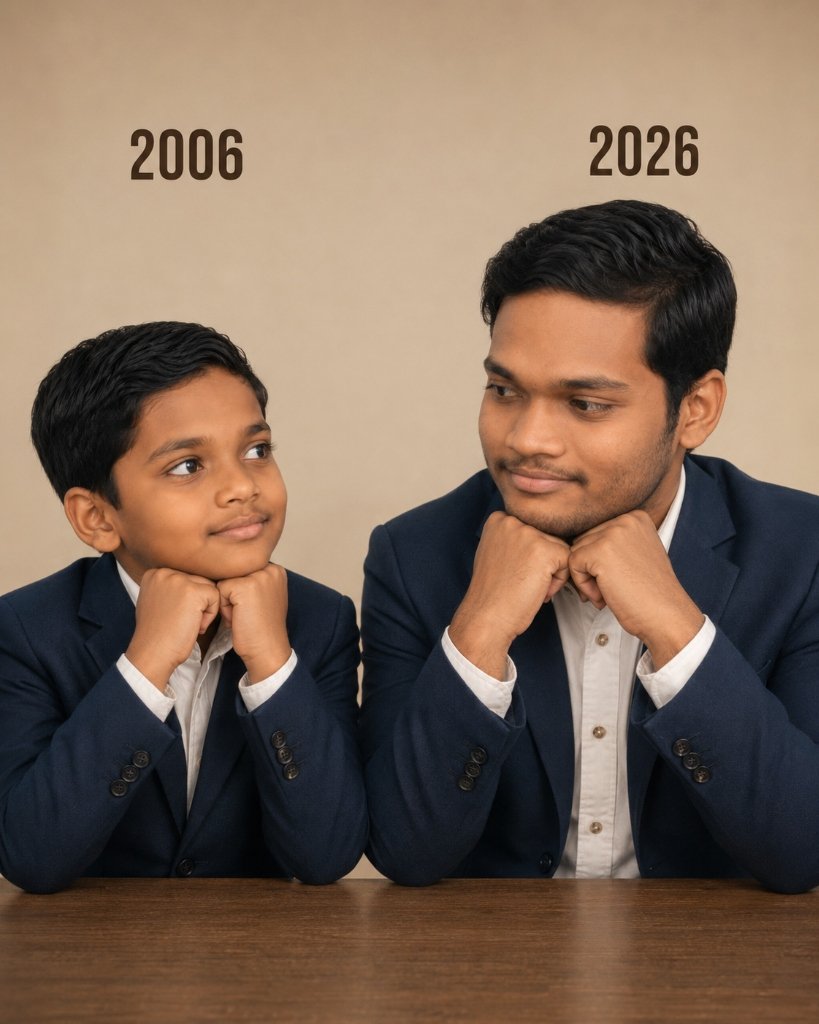
One of the most emotional and narrative-driven styles of photography is the "time-travel reunion"—an image depicting an adult character sitting face-to-face with a child version of themselves. Generating this type of image requires careful spatial instructions to prevent the model from merging the two characters.
To successfully render this scene without overlapping features, you must split the framing into clear left and right columns, and define the shared physical anchor. Here is the structure to follow.
1. Dividing the Frame: Left and Right Split
Direct the placement of both versions of the character explicitly:
- Left Side (The Past): "On the left side: A child version of me sitting, looking to the right with an innocent smile, with the year '2006' written in simple serif font above them".
- Right Side (The Present): "On the right side: A present-day adult version of me sitting, resting chin on hands, looking to the left with a calm, proud smile at the child, with the year '2026' written above them".
2. The Shared Physical Anchor: The Table
For the composition to look integrated, both subjects need to interact with a single central object. This provides realistic contact shadows and depth:
- "In the middle: a plain rustic wooden table on which both characters rest their elbows and hands".
- This creates a seamless connection, tying the two halves of the image together.
3. Establishing a Studio Background
Keep the background completely minimal to ensure the emotional connection between the two characters remains the main focus: "Soft, neutral plain studio backdrop in beige or light gray tones, completely uncluttered."
4. Cinematic Lighting and Realism
Warm, diffused lighting reinforces the nostalgic and emotional mood of the piece: "Soft, warm, cinematic studio lighting creating gentle shadows, natural skin textures, and a high-realism professional photoshoot aesthetic." Avoid flash glare to keep skin tones smooth and authentic.